UK judges given AI tools as China court speeds up cases
Master of the Rolls Sir Geoffrey Vos notes increasing use of artificial intelligence in legal advice and judicial processes.
 Incident → evidence → outcome
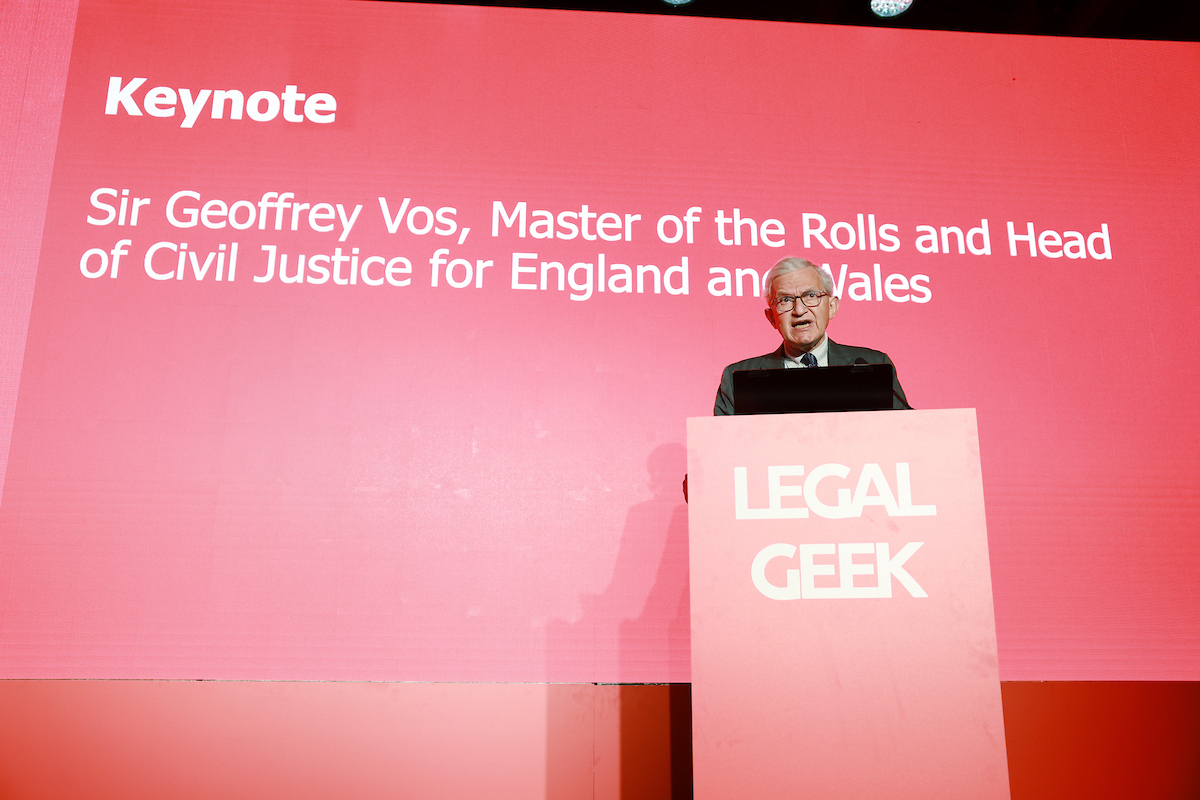
Judges in the United Kingdom are now being provided with a version of Microsoft CoPilot to assist with their work, according to the Master of the Rolls, Sir Geoffrey Vos. The announcement comes as artificial intelligence continues to integrate into the legal sector, influencing how citizens seek advice and how courts process cases.
Growing reliance on AI for legal advice
Sir Geoffrey Vos, speaking at the Legal Geek Conference on 14 October 2026, noted a significant shift in how people approach legal issues. He stated that almost everyone with a legal problem now consults a large language model (LLM) for answers before engaging a lawyer. This trend, which he predicted in 2024, has become a reality in the intervening years.
Furthermore, many legal professionals are routinely using AI tools such as Harvey or Legora to aid their legal work. Sir Geoffrey cautioned that lawyers and judges who do not adopt these technologies risk being left behind, facing a future where human decision-making might be influenced by machine output due to efficiency imperatives.
International adoption of AI in courts
The integration of AI in judicial processes is not unique to the UK. Judges in other countries, including South Korea, Kazakhstan, and China, are already using AI-enabled programmes to help decide cases. Sir Geoffrey Vos highlighted the Shenzhen Intermediate Peoples’ Court in China as an example of advanced AI implementation.
This Chinese court has developed an AI-powered platform that assists judges by distilling evidence, identifying key issues, and drafting judgments. According to one judge at the Shenzhen court, this system allows for the processing of six cases in the time previously taken for one. The platform handles all types of civil cases and operates on digital, machine-readable files, incorporating data security and hallucination protections.
A White Paper from the Shenzhen court, reviewed by Sir Geoffrey, indicates that judges no longer need to manually sift through extensive documents. Instead, their work involves checking, correcting, and supplementing AI-generated summaries, reducing tasks that once took a full day to mere tens of minutes. The system has reportedly assisted in drafting 678,000 judicial documents.
Sir Geoffrey Vos is in his final three weeks as Master of the Rolls and expressed his continued enthusiasm for the adoption of new technologies within the legal sector and judiciaries in the UK and internationally.
Questions this report answers
01What AI tools are UK judges using?
UK judges are being provided with a ring-fenced version of Microsoft CoPilot on their computers. This is part of a broader trend of AI adoption within the legal sector, influencing both legal advice and judicial processes.
02How is AI being used in courts in other countries?
In countries like South Korea, Kazakhstan, and China, judges routinely use AI programmes to assist in deciding cases. The Shenzhen Intermediate Peoples’ Court in China has developed an AI platform that significantly speeds up case processing by distilling evidence and drafting judgments.
03What did the Master of the Rolls say about AI and legal advice?
Sir Geoffrey Vos noted that citizens increasingly consult AI tools, like large language models, for legal advice before speaking to a lawyer. He also observed that many lawyers routinely use AI assistants for their legal work.
Support is available without a police report
Find London services, specialist support and the rights set out in the Victims’ Code. If someone is in immediate danger, call 999.
Find victim supportSend a correction or case update
If a hearing, charge or outcome has changed, send the court, case number and source document so we can update the record.
Contact the deskContinue the investigation
 CourtsPalantir and Mayor Khan end Met police AI contract dispute
 CourtsFootballer Semenyo 'froze' after alleged racial abuse at Anfield